caring for parents
When you notice your parent isn't really cooking

Talina
You don't decide anything on the drive home. You just noticed something.
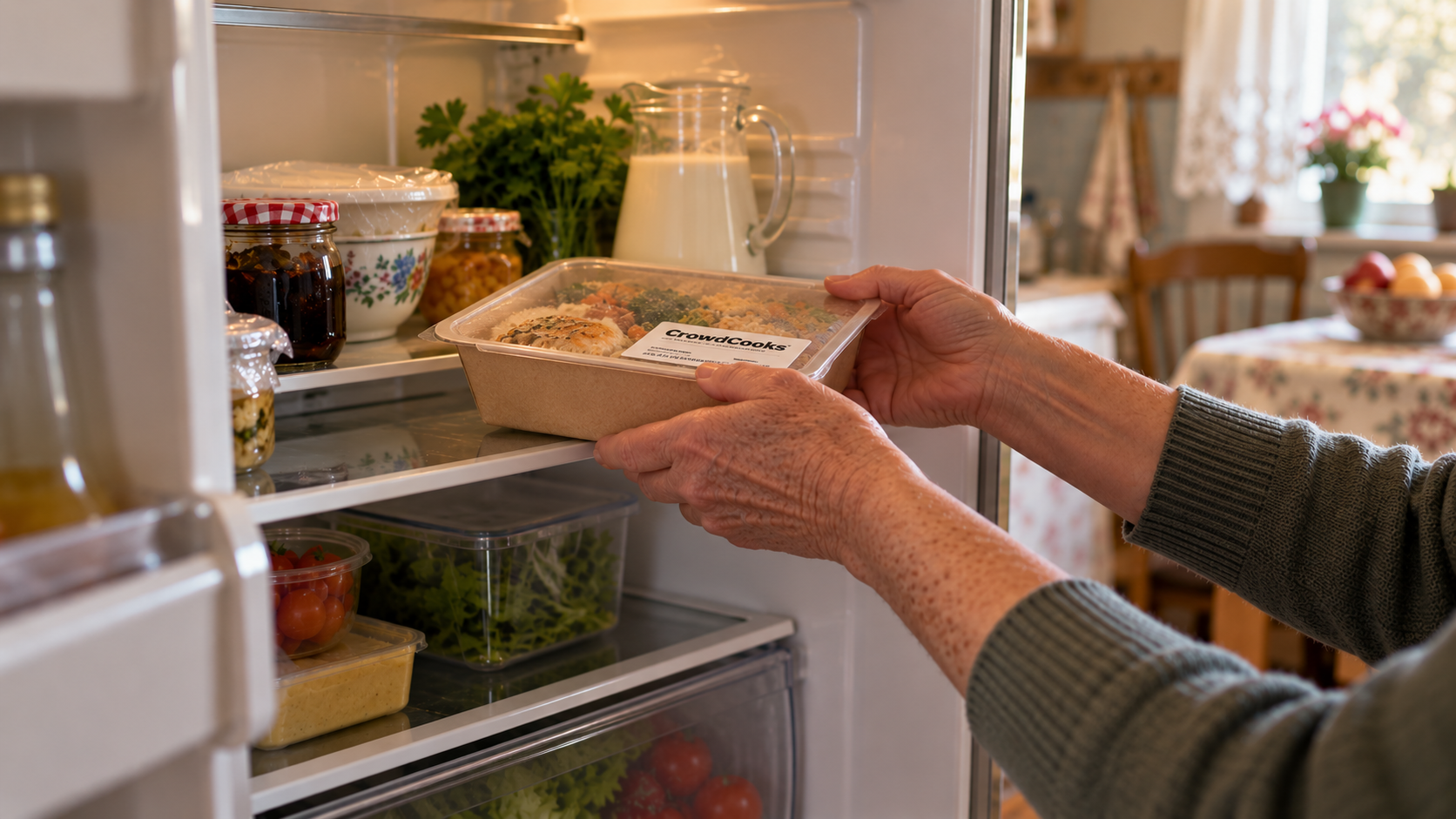
The fridge had a carton of milk, some cheese, half a cucumber going soft. The same jar of something that was already there in July. Your mother said she'd eaten earlier, and maybe she had.
It's rarely that they can't
The assumption is that cooking stops because someone becomes unable. Usually that isn't it.
Cooking is a chain: deciding what to have, getting to the shop, carrying it home, keeping track of what's still good, standing at the counter for half an hour, and then sitting down to eat it alone. Any one link breaking is enough to stop the whole thing — and for a lot of people the last link breaks first. Making a proper meal for one person, every day, with nobody to make it for, isn't a skill problem. It's a motivation problem, and a fairly reasonable one.
So when you see the half-empty fridge, you're not necessarily looking at decline. You might be looking at someone who has quietly decided it isn't worth the trouble.
Why “we need to talk about your eating” doesn't work
Most of us open this the same way, and it's the way most likely to fail.
The moment you make it a conversation about eating, you've made it a conversation about capability. And agreeing with you means agreeing that something has slipped. That's a lot to ask of someone at their own kitchen table, so the answer is nearly always the same: I'm fine, I eat plenty, don't worry about me.
Then you're left choosing between insisting and dropping it, and neither of those gets anyone fed.
Remove a step instead of taking over
The chain has links. You don't have to take the whole chain.
Take the shopping. Or take the deciding. Leave the cooking, if that part still works and still means something to them. One removed link can restart the whole thing, and it doesn't require anybody to admit anything.
It also helps to make it about you rather than about them. “I hate the idea of you carrying bags up those stairs” lands differently from “you shouldn't be carrying bags”. The first is your feeling, which nobody has to argue with. The second is an assessment.
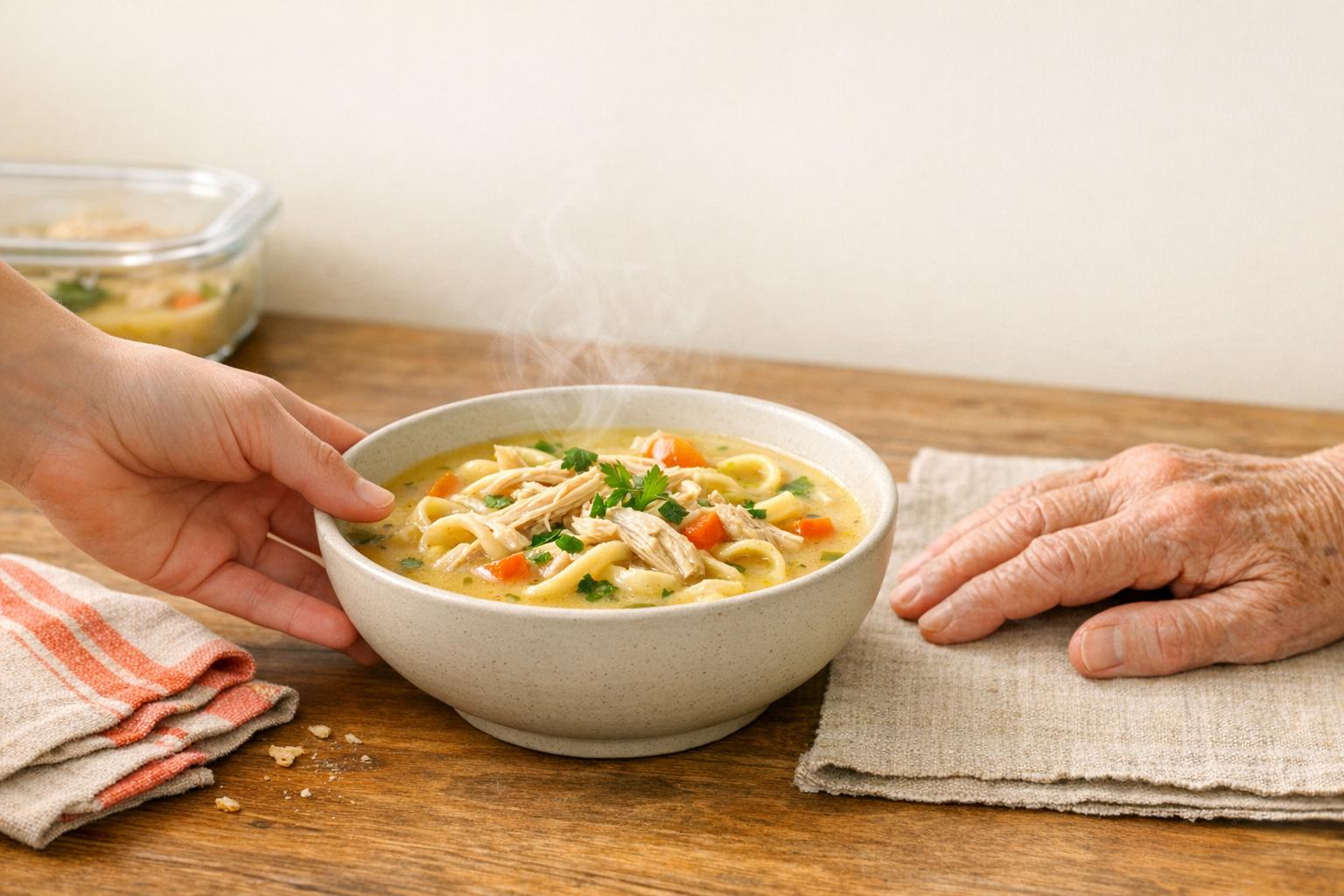
That's also where a meal subscription earns its place, and why it works better than it sounds: the plan sits on your account and your card. You choose, you pay, the box arrives at their door. Your parent takes one out of the fridge and puts it in the microwave for three minutes. Nobody has to go online, order anything, or discuss whether they need help.
A full freezer is information
If you've been bringing meals round and finding them still there weeks later, that isn't ingratitude and it isn't a bad sign about their appetite.
It's usually about effort. A container that needs thawing, then reheating, then a decision about what to have with it, is three steps at six in the evening. It loses to a slice of bread every time. What gets eaten is what's ready — warm in a few minutes, complete on the plate, no thinking required.
So if you take one thing from the freezer experiment, take that. The bar isn't nutrition. The bar is effort.
What you might do this month
- Ask what they had yesterday, rather than whether they're eating well. The first one gets you a real answer.
- Look in the freezer next time, not the fridge. Untouched food tells you more than empty shelves.
- Remove one step, and only one. See what changes before you change anything else.
You don't need to decide anything this month. Nobody has to move, or accept help, or have The Conversation.
You noticed something on the drive home, and noticing is the part most people skip. The rest can be one small thing at a time.
Ordering for someone else? Have a look at this week's menu — twelve dishes, a different line-up every week, delivered to whichever address you choose, and you can skip any week you don't need it.
Read next: Is your parent eating enough? Meals that work after 70