family life
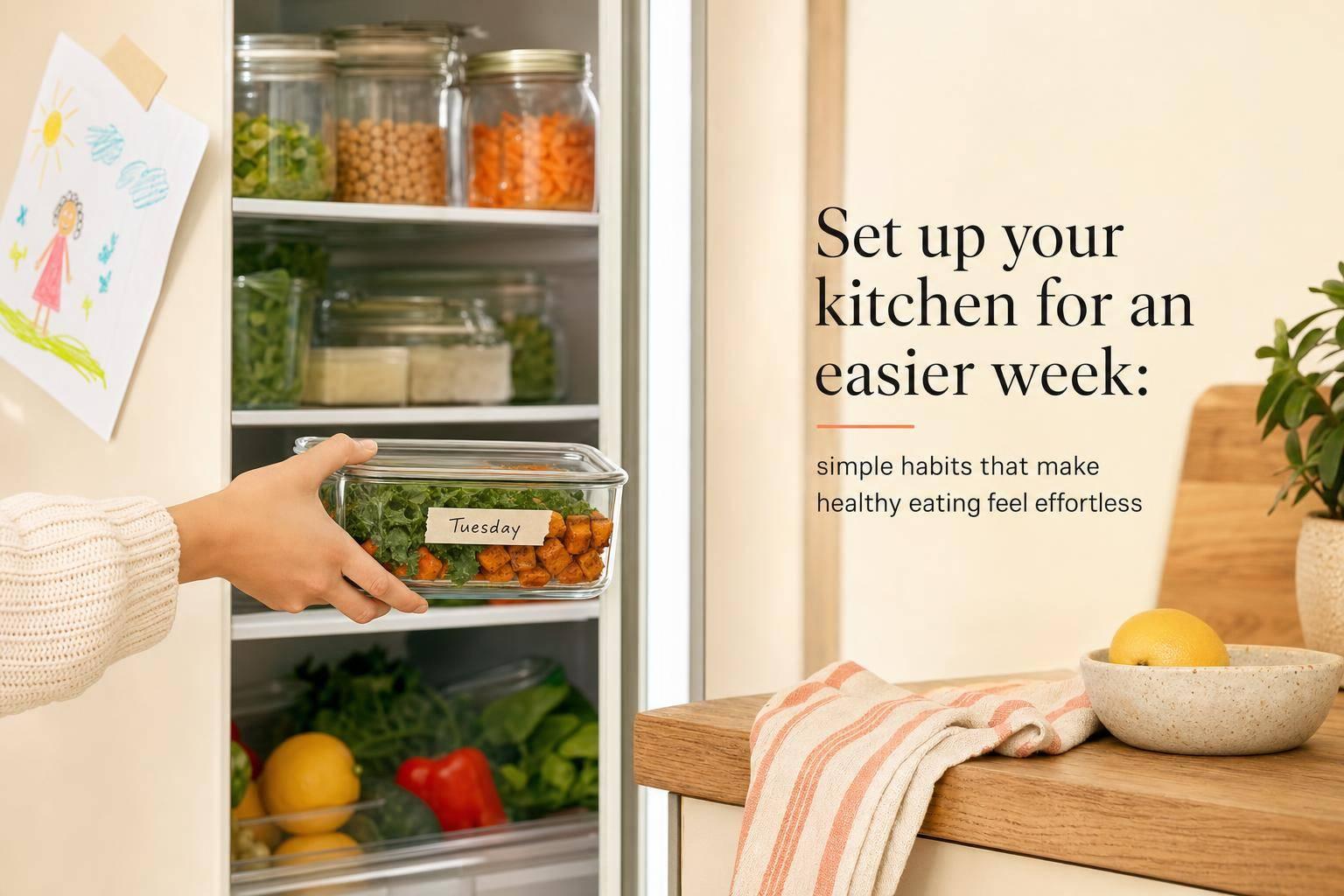

You can usually tell how the week will go by what happens when the fridge door opens. If dinner feels like one more task you do not have the brain space for, the fix is often not a new recipe. It is a better setup. I find that a few small kitchen habits - planned around the busiest parts of the week - make eating well feel far less like a nightly exam.
Most food choices are made fast. Some studies put daily decisions in the thousands, and by evening our brains are not exactly in top form. So the goal is simple: make the next decent meal the easiest thing to see, reach, and sort.
We do not need a show-home pantry. We need a kitchen that stops fighting us.
The first shift is to plan around our actual week, not our best intentions. A tidy fridge does not help much if Thursday is chaos every single week. I like to pick a few default meals first: one breakfast, one lunch, and one dinner fallback that asks almost nothing of me. That alone cuts a surprising amount of mental clutter.
A default day does not need to be exciting. It needs to work.
Yoghurt and fruit in the morning. Tartines with veg and protein at lunch. A ready meal or simple backup dinner at night. Done. When the same low-effort option is already decided, there is less room for the 16.00 snack drift, the random bakery stop, or the “maybe crisps count as a meal?” era.
Then I give the week one fixed prep slot. Not a three-hour life overhaul. More like 15 minutes.
That short reset is enough to check the calendar, write a small shopping list, and sort a few basics: wash salad, cook one grain, chop a few vegetables. Research on eating habits often points to the same boring truth: when food is washed, visible, and close at hand, we are more likely to eat it. Not glamorous. Very useful.
This is also where we fit the hard evenings, instead of pretending they will sort themselves out. For those nights, we keep one low-effort dinner in the plan. At CrowdCooks, we see this all the time: people are not looking for dinner theatre on a Wednesday. They want something good in the fridge that can be ready in 3 minutes and keep for up to 5 days. That kind of backup can stop one rough evening from knocking over the rest of the week.
After the weekly plan comes the kitchen itself.
I think of a calm kitchen in zones. Not in a fancy, label-maker-with-a-Pinterest-account way. Just in a “put things where they earn their keep” way.
Keep a prep area near the sink and fridge. That is where most of the work already happens, so the board, knives, peeler, bowls, and compost bin should live there too. If slicing a pepper means opening three cupboards and moving a vase, the kitchen is making dinner harder than it needs to be.
The hob area should hold pans, spatulas, oil, and the seasonings you use most. The sink should have cloths and washing-up bits within reach. Plates and glasses near the dishwasher help too. None of this changes your life in one dramatic swoop, but it cuts the tiny annoyances that make a normal meal feel oddly irritating.
Then there is the leftovers problem. Or, to give it its full name, the container with no lid and no clear backstory.
A single drawer or shelf for containers, lids, labels, and a marker makes a big difference. When everything for leftovers and lunch packing lives in one place, using food again becomes much more likely. Clear containers help. So do dates. If people know what something is and when it was made, they are far more likely to eat it before it turns into a small science project.
Visibility does half the job.
What sits at eye level gets chosen first. That is just human nature. So the top shelf should not be random sauces and a questionable jar of olives from last month. It should be the food you want to use soon: cut vegetables, cooked grains, fruit, yoghurt, or tonight’s dinner.
I like the idea of a ready-tonight shelf. One clear spot in the fridge that answers the daily question before anyone asks it. This is dinner. No rummaging. No debate. No standing in the cold light of the fridge hoping inspiration will descend.
The same goes for snacks. A fruit bowl on the counter works because people see it. A small grab-and-go spot in the fridge works because tired people, hungry children, and adults pretending they are “just checking” the fridge all tend to grab what is easiest. If that spot holds nuts, yoghurt, tomatoes, or chopped veg, the path of least resistance starts working in your favour.
There is also a simple stock habit that saves money: first in, first out.
Move older items to the front. Put new items behind them. Label leftovers with the dish and date. Keep a short running shopping list on the fridge. The average Belgian household still throws away a lot of food each year, and much of it comes down to the same dull issue: people forget what they have. A marker pen costs less than the extra supermarket trip that somehow becomes €26 and still does not solve dinner.
The part I come back to most is this: healthy eating often has less to do with motivation than with friction.
If cooking starts from zero every night, it asks a lot from you. If lunch has to be invented at the last minute, it usually ends in something random. If leftovers are hidden, they do not exist. But if the kitchen makes the next step obvious - grain ready, veg chopped, dinner visible, labels in place - weekday eating feels calmer almost by accident.
That is the win.
Not a perfect kitchen. Not a perfect week. Just a setup that asks a bit less from you when energy is low. And honestly, for most of us, that is more than enough.
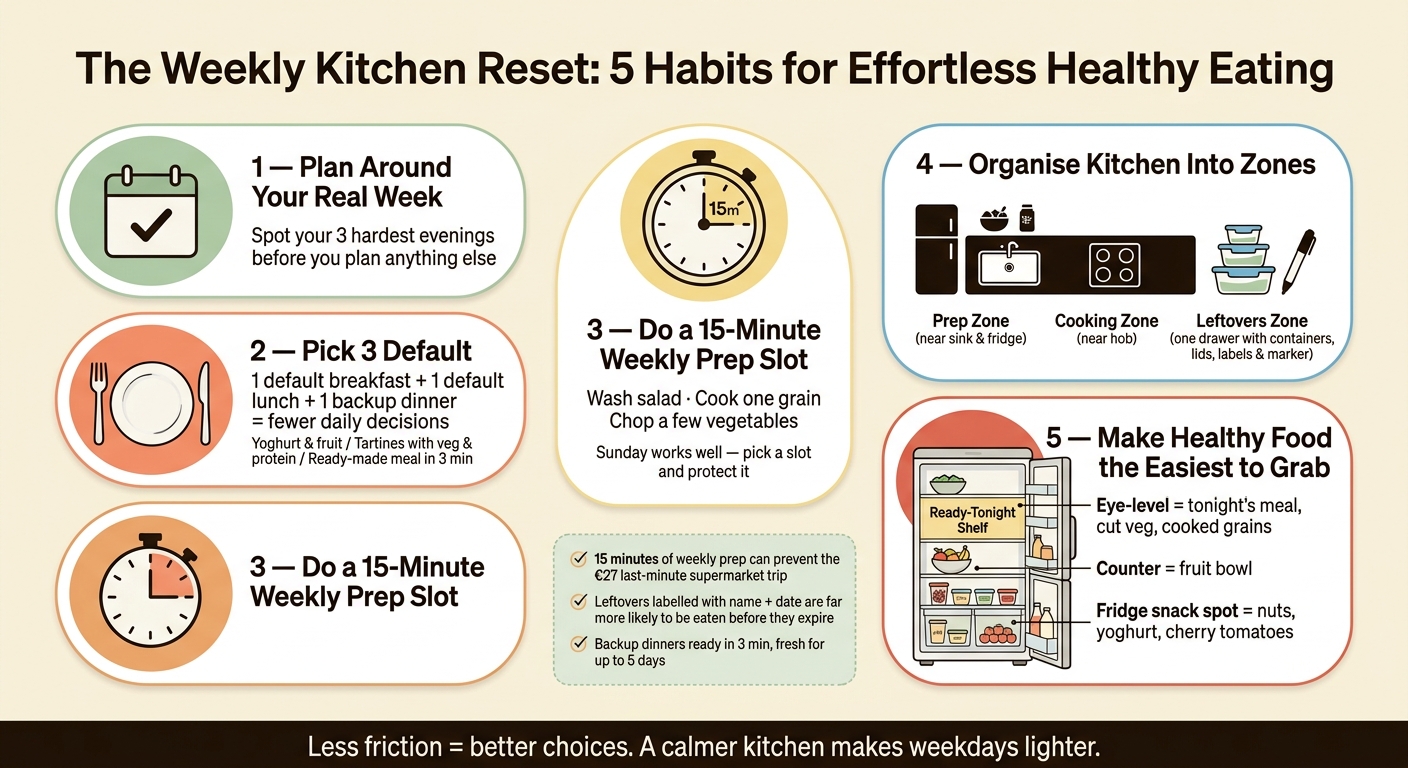
The Weekly Kitchen Reset: 5 Habits for Effortless Healthy Eating