
Belgian households waste a lot of food each year, leading to financial losses and environmental harm. Meal subscriptions can help solve this problem by providing pre-portioned meals, cutting food waste by up to 38%.
Here’s how they work:
- Exact Portions: You get only what you need, avoiding overbuying and leftovers.
- Less Waste: Studies show a 45% drop in preparation waste and a 34% decrease in cooking waste.
- Cost Savings: By reducing waste, households save money that would otherwise be lost on unused groceries.
For example, Crowd Cooks delivers ready-to-eat meals in recyclable packaging, sources ingredients locally, and donates surplus meals. This approach not only helps you save money but also reduces your carbon footprint. Meal subscriptions are a convenient way to eat well while wasting less.
How Meal Subscriptions Reduce Food Waste: Key Statistics and Cost Comparison
Food Waste in Belgian Households
Overbuying and Wasted Money
Belgian households often struggle to accurately gauge how much food they really need, which often leads to buying too much. With hectic schedules and unplanned grocery trips, it's easy to end up with extra ingredients that never get used.
A study conducted between November and December 2019, involving researchers like Sebastian Schuster from Technische Universität Berlin and Melanie Speck from the Wuppertal Institute, examined 8,747 meals from 914 households across six countries, including Belgium. Published in the Journal of Cleaner Production in November 2022, the study found that traditional grocery shopping habits frequently lead to purchasing more ingredients than are required for a single meal. This tendency to overbuy is deeply ingrained in how people plan meals, shop, and even entertain guests. As a result, items like wilted vegetables, expired dairy products, and unused portions often end up in the bin, wasting both food and money. Many households remain unaware of just how much they throw away.
Environmental and Financial Costs
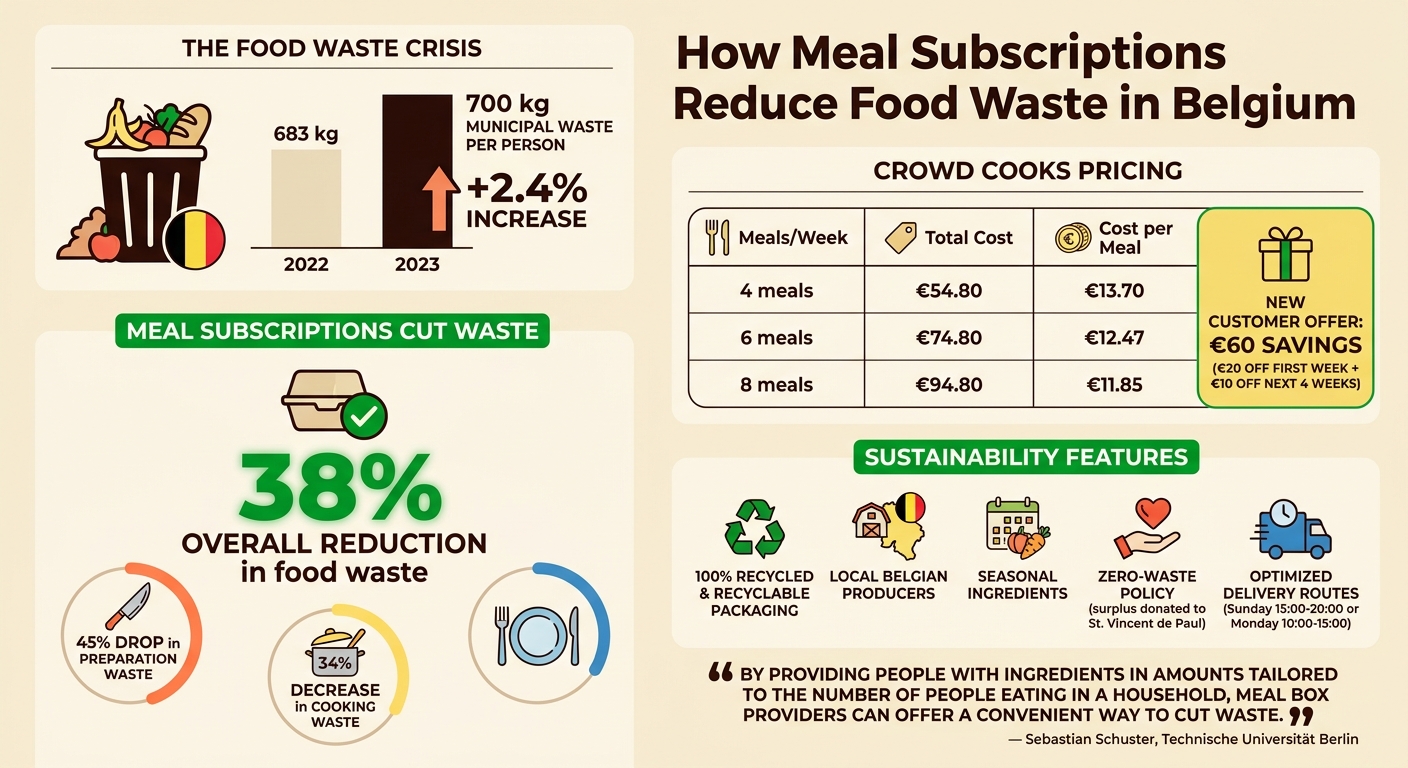
In 2023, Belgium's municipal waste production hit 700 kg per person, a 2.4% rise from 683 kg in 2022. While not all of this waste is food-related, a considerable amount comes from meal preparation and leftovers left untouched in pots and pans. The environmental impact of this is significant - rotting food in landfills releases methane, a greenhouse gas that contributes to climate change.
Beyond methane emissions, wasted food represents a loss of the water, energy, and packaging that went into its production. For Belgian households, this translates into both ecological harm and avoidable financial costs.
"Food waste not only squanders natural resources, money and effort, it degrades the environment." - The Conversation
Much of the problem stems from poor portion planning, which leads to cooking more food than necessary and generating excess waste. Addressing this issue requires households to adopt better meal planning and portion control strategies.
Food startup uses AI to cut food waste
How Meal Subscriptions Reduce Food Waste
Meal subscriptions address food waste at its core by rethinking how ingredients are delivered to your home. Instead of buying large packages of ingredients that often go unused, these services provide only what you need - no more, no less. Research shows that meal subscriptions can reduce food waste by up to 38%, largely because they minimise waste during preparation and cooking. This precise system promotes better portion control and more efficient meal planning.
"By providing people with ingredients in amounts tailored to the number of people eating in a household, meal box providers can offer a convenient way to cut waste."
– Sebastian Schuster, Researcher, Technische Universität Berlin
Pre-Portioned Meals
Crowd Cooks has taken the guesswork out of meal preparation by offering ready-to-eat meals in standardised 450-gram portions. This eliminates the common issue of over-preparing, such as cooking too much pasta or chopping more vegetables than necessary. Each meal arrives fully cooked and portioned, removing the need to measure, trim, or estimate quantities.
Not only does this simplify your cooking process, but it also reduces waste at every step. There are no vegetable peelings, no leftover ingredient halves, and no unused food sitting in pots. Meals come in 100% recycled and recyclable containers, ensuring sustainability even in packaging.
Crowd Cooks has also committed to a zero-waste policy since its launch in 2019. Any surplus from production or undelivered boxes is donated to the St. Vincent de Paul association, ensuring that no food is wasted, even at the production stage. Combined with scheduled deliveries, this system ensures that your food supply matches your household's exact needs.
Weekly Deliveries
With just one weekly delivery - scheduled for Sunday afternoon or Monday morning - you receive a carefully controlled food supply tailored to your needs. You can choose between 4 and 14 meals per week, which helps avoid the impulse purchases that often occur during frequent grocery store visits.
These meals are designed to remain fresh in your fridge until Friday, giving you flexibility throughout the week. If any meals go unused, they can be frozen to extend their shelf life, providing a backup option to prevent waste. The subscription also lets you adjust meal quantities or pause deliveries depending on your plans, ensuring you only receive food when you need it. By offering precise portions and regulated deliveries, meal subscriptions help reduce household food waste and save money.
sbb-itb-6dbd42c
Cost Savings from Reduced Food Waste
Eliminating Grocery Waste
Traditional grocery shopping often leads to "fridge rot" - those forgotten vegetables, herbs, and proteins that spoil before they can be used. Many Belgian households face this problem when they buy in bulk, only to find that their actual consumption doesn’t match their purchases.
Meal subscriptions tackle this issue by delivering ingredients in precise, pre-portioned amounts. This approach significantly cuts food waste, with studies showing a 38% overall reduction in food waste, including a 45% drop in preparation waste and a 34% decrease in cooking waste. Plus, it helps avoid those tempting impulse buys at the supermarket.
"For households that regularly discard wilted vegetables, the food waste savings can meaningfully offset the higher per-serving cost [of meal kits]."
– Carolina Schneider, MS RD, Daily Harvest
By reducing spoilage, households can save a considerable amount on their grocery bills. These savings become especially apparent when comparing the costs of meal kits to the money wasted on unused food.
Cost Comparison: Crowd Cooks vs. Grocery Waste
Caption text
Let’s break it down. A Crowd Cooks 4-meal plan costs €54.80 per week (€49.90 for the meals plus €4.90 for shipping), which comes to about €13.70 per meal. While this might seem more expensive than preparing meals from groceries, the key lies in the savings from reduced food waste.
By cutting food waste by 38%, Belgian households can redirect money previously spent on discarded groceries toward the cost of meal subscriptions. Plus, new customers can benefit from a €60 introductory offer - €20 off the first week and €10 off for the next four weeks - bringing the first week's cost down to just €34.80.
| Number of Meals | Base Price | Shipping | Total Weekly Cost | Cost per Meal |
|---|---|---|---|---|
| 4 Meals | €49.90 | €4.90 | €54.80 | €13.70 |
| 6 Meals | €69.90 | €4.90 | €74.80 | €12.47 |
| 8 Meals | €89.90 | €4.90 | €94.80 | €11.85 |
The real advantage of meal kits lies in paying only for what you eat. With ingredients that stay fresh until the end of the week - and can even be frozen - you avoid wasting money on food that ends up in the bin. This not only helps stretch your household budget but also reduces unnecessary waste, creating a win-win for both your wallet and the planet.
Environmental Benefits of Meal Subscriptions
Eco-Friendly Packaging and Delivery
Meal subscriptions are making strides in reducing waste and emissions through smarter packaging and delivery methods. Take Crowd Cooks, for example. They use containers that are not only made from 100% recycled materials but are also fully recyclable, tackling the problem of single-use plastics head-on.
Their delivery system is just as thoughtful. By consolidating deliveries into set time slots - Sunday between 15:00 and 20:00 or Monday from 10:00 to 15:00 - they streamline transport routes. This means fewer vehicles on the road and less fuel burned per meal delivered. On top of that, any undelivered boxes or extra meals don’t go to waste - they’re donated to St. Vincent de Paul, ensuring surplus food serves a purpose.
This careful balance of packaging and delivery goes hand in hand with their focus on sourcing ingredients locally.
Local Producers and Seasonal Ingredients
Crowd Cooks also works closely with Belgian producers to source fresh, local ingredients. This approach cuts down on transportation emissions while supporting local farmers. By designing menus around what’s in season, they avoid relying on out-of-season produce, which often requires energy-intensive growing methods or long-distance shipping.
Shorter transport distances mean fresher ingredients and a much smaller carbon footprint. Seasonal menus also reduce food waste, as produce doesn’t have to endure long transit times. Collaborating with small-scale farmers not only strengthens local food systems but also ensures that meals are both environmentally friendly and packed with flavour.
Conclusion
Meal subscriptions tackle food waste effectively by providing pre-portioned ingredients, which help avoid overbuying and reduce spoilage.
Studies reveal that meal kits can lower food waste by 38%, with significant reductions in waste during preparation and cooking as well.
Priced at around €12,47 per meal, Crowd Cooks minimises unnecessary ingredient waste while keeping meals fresh for up to five days.
By using 100% recycled packaging and sourcing ingredients from Belgian producers, Crowd Cooks reduces its carbon footprint. Additionally, surplus meals are donated to St. Vincent de Paul, making a positive community impact.
For busy families in Belgium, meal subscriptions ease the stress of meal planning, offering convenient, high-quality nutrition that benefits both your wallet and the planet.
FAQs
How much money can I realistically save by wasting less food?
Reducing food waste with meal boxes is a smart way to cut down on grocery costs. Research indicates that households using meal boxes reduce food waste by about 38%, which translates to considerable savings in the long run. With pre-portioned ingredients delivered to your door, you avoid buying more than you need and wasting unused food. This not only makes your spending more efficient but also helps minimise waste.
Are pre-portioned meals worth it if I cook for a family?
Pre-portioned meals can be a smart choice for families, especially when it comes to cutting down on food waste. By offering exact ingredient amounts, these meal kits have been shown to reduce household food waste by as much as 38%, particularly during meal prep. For families juggling busy schedules, they save time by streamlining meal planning and reducing the need for frequent shopping trips. Plus, they help avoid the frustration of ingredients going bad before they’re used.
Take CrowdCooks, for example - their ready-to-eat meal options not only make life easier but also prioritise sustainability. They use eco-friendly packaging and source ingredients locally, making them a thoughtful option for environmentally conscious households.
What should I do with meals I don’t eat before Friday?
To cut down on waste, make sure to refrigerate or freeze any meals you won’t eat before Friday. CrowdCooks meals are crafted to stay fresh for several days, giving you the flexibility to enjoy them when it suits you. Plus, you can pause or cancel your subscription if your plans change. Storing your meals properly keeps them safe and tasty for later.