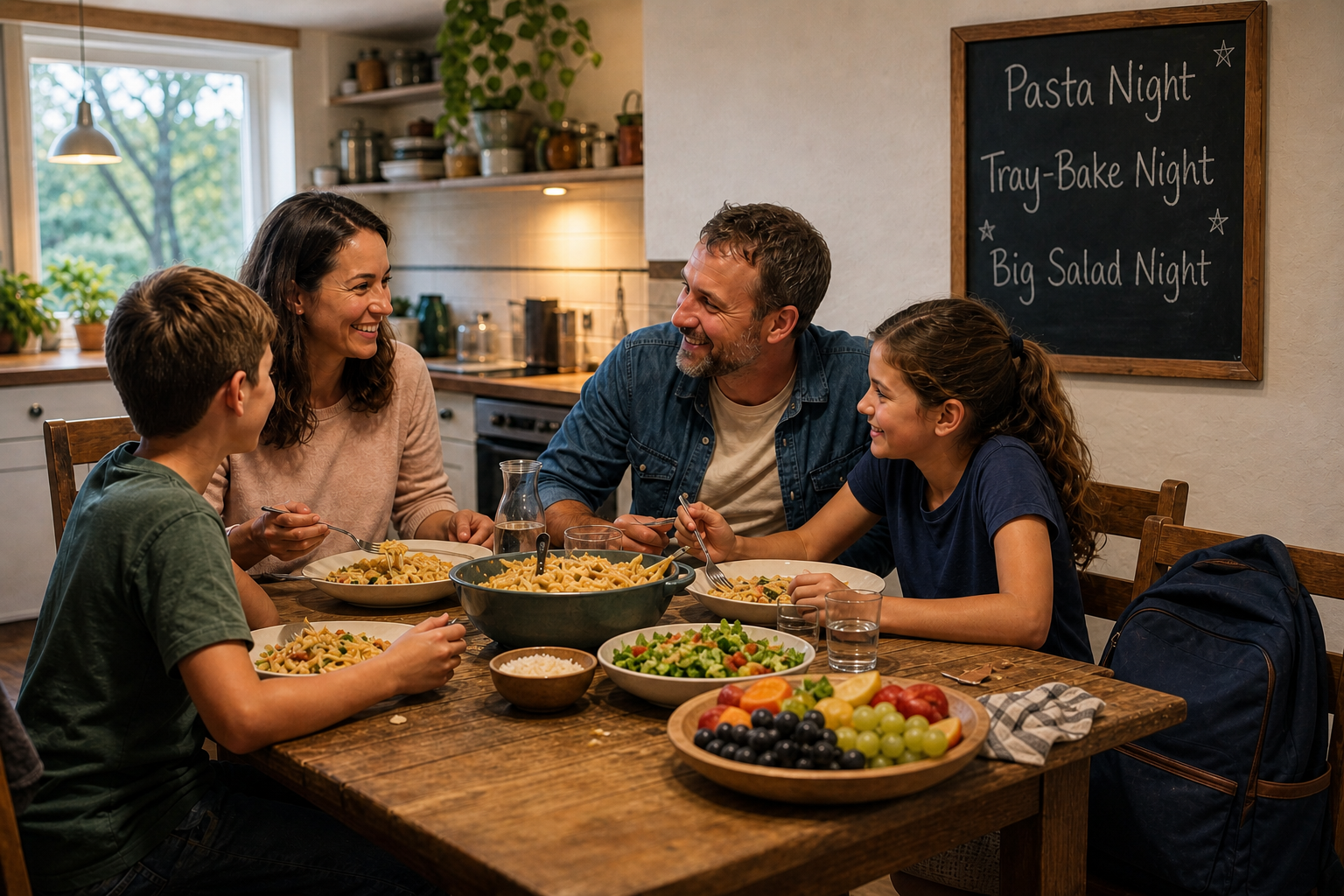

It's 7 PM, you're at a cosy Belgian brasserie, and the waiter places a plate in front of you. A generous serving of carbonnade flamande, fries piled high, and a dollop of mayo on the side. It looks delicious. But here's the thing: that portion is likely double what you'd serve yourself at home. And without even realising it, you'll probably eat most of it. Why? Because portion sizes are sneaky like that.
Here’s the deal: the size of the food on your plate has a bigger say in how much you eat than your hunger does. Research shows that when portions grow, so does how much we consume - often by 35% or more. Over time, this quiet habit can lead to weight gain without us even noticing. But the good news? Understanding portion sizes is the first step to taking back control.
Let’s unpack how portion sizes influence our eating habits, why Belgium’s love for hearty servings plays a role, and how small changes - like using smaller plates or opting for pre-portioned meals - can make a big difference.
How Portion Sizes Affect Eating Habits: Key Research Findings
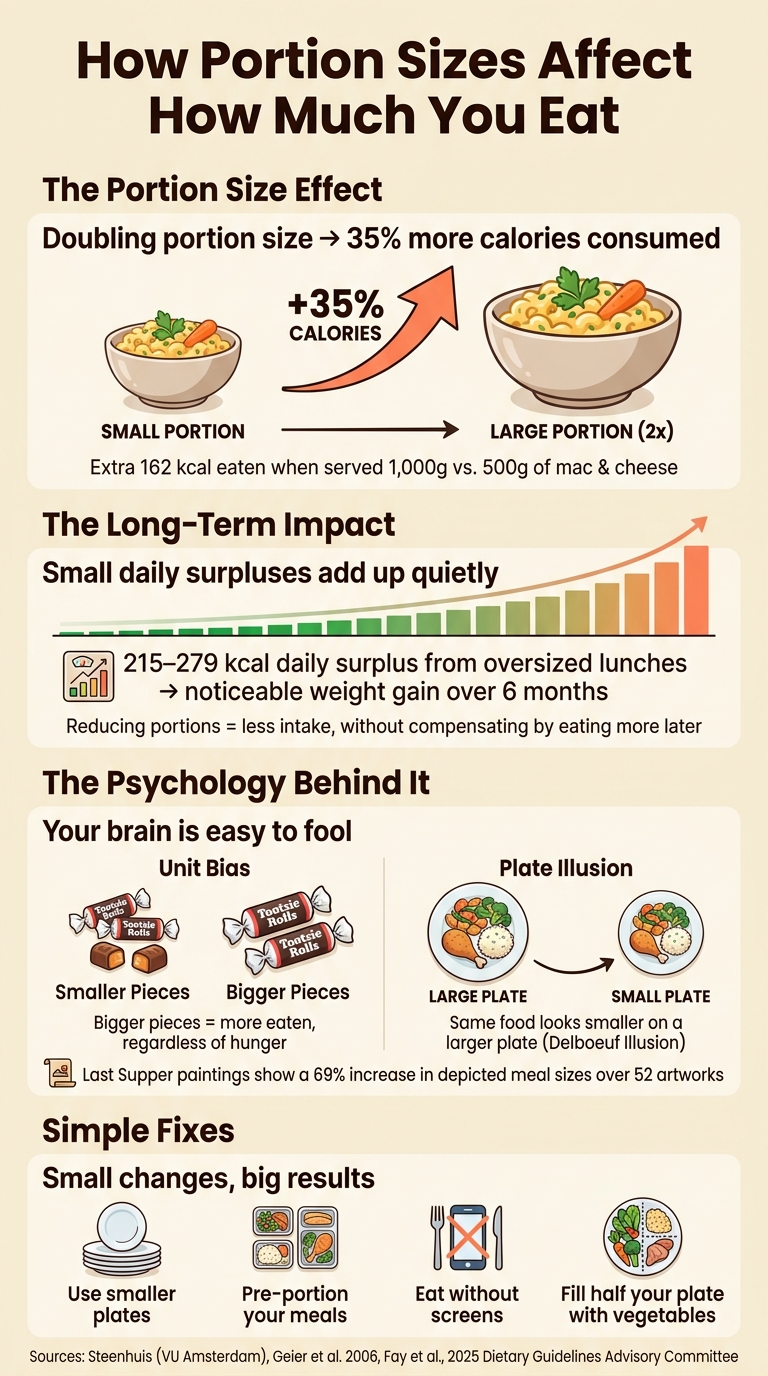
How Portion Sizes Affect How Much You Eat: Key Statistics
How Larger Portions Change What You Eat in a Single Meal
Portion distortion isn’t just a catchy term - it’s a real phenomenon backed by research. Studies consistently show that the size of your serving influences how much you eat, often more than hunger itself. This "portion size effect" (PSE) is surprisingly universal, cutting across age groups, food types, and even cultures.
Here’s a striking example: doubling the portion size can lead to a 35% increase in calories consumed. In one study on macaroni and cheese, participants ate an extra 162 kcal when served a 1,000 g portion compared to a 500 g portion. The kicker? This isn’t a conscious choice. Larger portions encourage bigger bites and faster eating, which delays the feeling of fullness. By the time your brain gets the memo, the plate is already empty.
"The portion size (rather than hunger or satiety) directs food consumption and steers food intake." - Ingrid Steenhuis, Department of Health Sciences, Vrije Universiteit Amsterdam
So, it’s not just about what’s on the plate - it’s how much. And the effects go beyond a single meal.
How Repeated Exposure to Portion Sizes Affects Weight Over Time
One oversized meal won’t make or break your diet. But when those larger portions become a habit, the impact quietly adds up. Research tracking eating patterns over six months found that regularly consuming high-energy lunches led to noticeable weight gain. The reason? Even small daily surpluses - 215 to 279 kcal - build up over time. It’s not dramatic, but it’s steady, and that’s what makes it so sneaky.
Interestingly, when portion sizes are reduced, people eat less without compensating by overeating later. This means smaller portions can effectively lower calorie intake without requiring constant effort or calorie tracking. Unlike other dietary changes, this adjustment works subtly, helping manage long-term energy balance without feeling restrictive.
The takeaway? Portion control isn’t just a short-term fix - it’s a long-term strategy for healthier eating habits. These findings highlight just how powerful small changes can be when it comes to maintaining a healthy weight over time.
sbb-itb-6dbd42c
Psychological and Environmental Drivers Behind Portion Size Effects
How Perception and Cognitive Biases Shape What Feels Like a Normal Portion
Our brains are surprisingly easy to fool when it comes to food. We rely heavily on visual and contextual cues to decide what looks like a "normal" portion - and these cues can be deceptive.
Take unit bias, for example. This is the tendency to see one unit of something as a single serving, no matter its actual size. In a 2006 study published in Psychological Science, researchers Andrew B. Geier, Paul Rozin, and Gheorghe Doros tested this by placing bowls of Tootsie Rolls in an office. They alternated between small (3 g) and large (12 g) pieces. The result? People ate more when the pieces were bigger, not because they were hungrier, but because each piece felt like a reasonable amount. Similarly, when pretzel pieces were halved, total consumption also dropped by half.
The size of your plate also plays tricks on your perception. Thanks to the Delboeuf illusion - an optical effect - the same portion of food appears smaller on a large plate than on a small one. This often leads to serving yourself more food than you need, simply because your brain is trying to "fill the space."
Even history backs this up. A study of 52 Last Supper paintings found that meal sizes depicted in the artwork increased by 69% over time, reflecting changing perceptions of what constitutes a "normal" portion. Understanding these psychological quirks is a step towards regaining control over portion sizes in daily life.
Mindful Eating vs. Mindless Eating
If visual cues already make portion control tricky, distractions only make it worse. Eating while watching TV, scrolling through your phone, or rushing through a meal can completely disconnect you from your body's natural hunger and fullness signals. When you're distracted, it's harder for your brain to keep track of how much you've eaten - and by the time you realise you're full, you've often cleared your plate.
The antidote? Mindful eating. By removing distractions and focusing on your meal, you become more aware of your body's cues. Research shows that people who eat mindfully are satisfied with smaller portions, simply because they're paying attention to how they feel.
Your environment plays a quiet but powerful role here. Small changes, like using smaller plates, pre-portioning meals, or eating without screens, can align with your brain's natural tendencies instead of fighting against them. While these strategies aren't a cure-all, they make it easier to avoid overeating and stick to portions that truly satisfy.
How to Apply Portion Control in Daily Life
Portion Control Tips for Eating at Home
Understanding why we overeat is one thing, but actually changing how much we put on our plates? That's the real challenge. A simple trick is to switch to smaller plates. Thanks to something called the Delboeuf illusion, a smaller plate makes your meal look fuller, which can leave you feeling more satisfied.
Planning ahead is another game-changer. Research by Fay et al. highlights that premeal planning is a strong predictor of how much we eat. For instance, decide before you start cooking to fill half your plate with vegetables if you're making a rich main dish. Studies show that upping your veggie portions encourages you to eat more of them without adding too many calories overall. Small changes like these at home can help you build better habits for eating out too.
Portion Sizes When Eating Out and Using Ready Meals
The same ideas apply when you're dining out or relying on ready meals. Both situations can help you reset what you think of as a "normal" portion, especially when you consider the psychological and environmental factors we talked about earlier.
Restaurants often serve portions big enough for two, making it easy to overeat. To avoid this, try splitting a main course with someone or opting for a smaller starter instead of a full entrée. These tweaks let you enjoy your meal without overdoing it.
For ready meals, pre-portioned options take the guesswork out of eating. Research supports this approach, showing that serving food in smaller, fixed portions reduces how much adults eat. It’s a simple way to create a natural stopping point during your meal.
Take CrowdCooks as an example. Their chef-prepared meals are portioned at 450 g, offering a balanced serving every time. With a rotating weekly menu of 12 dishes featuring fresh, locally sourced ingredients and options like high-protein or calorie-smart meals, CrowdCooks makes portion control effortless. It’s one less decision to make in your busy day.
Conclusion: Using Portion Control to Build Healthier Eating Habits
Research makes it clear: portion control has a powerful impact on how we eat. Larger portions often lead to eating more, sometimes without realising it. But here's the good news - those same psychological triggers that tempt us to overeat can also work for us. When portions are already the right size, visual cues and instincts like the "clean plate" habit can help you feel satisfied without needing to rely on sheer willpower.
Pre-portioned meals take advantage of these natural tendencies, helping to lower calorie intake while subtly adjusting what we consider a "normal" portion. According to the 2025 Dietary Guidelines Advisory Committee, consistent exposure to controlled portions can reshape how we perceive a satisfying meal. It's not just about eating less; it's about retraining your instincts to align with healthier habits.
And there’s more to love. Pre-portioned meals - like CrowdCooks's perfectly sized 450 g chef-prepared dishes - don’t just support better eating habits. They also reduce food waste, making it easier to eat in a way that’s better for the planet.
Portion control is about more than just managing calories. It’s a way to build mindful eating habits that stick, paving the way for a healthier, more balanced lifestyle in the long run.
FAQs
How can I tell what a “normal” portion is?
Constant exposure to oversized servings has a sneaky way of messing with what we think is a "normal" portion - this is what’s known as portion distortion. Essentially, a portion is just the amount of food you decide to eat in one sitting. To keep things in check, it’s smart to aim for the smaller side of what feels reasonable.
Why do bigger plates make me eat more?
Larger plates and portions can trick your brain into thinking you need more food, a phenomenon often called portion distortion. Over time, this reshapes what you consider a "normal" serving size and can lead to eating more than you intended - without actually feeling hungrier. Things like oversized tableware or cleverly designed packaging can easily override your natural cues for fullness.
What’s the easiest way to control portions when eating out?
When dining out, keeping portions in check can feel like a challenge, especially with all the subtle cues nudging you to eat more. The key? Pay attention to your meal and trust your hunger signals. If smaller portions are an option, go for them - it’s a simple way to stay on track. At home, CrowdCooks takes the guesswork out of portion control with pre-portioned, chef-prepared meals that balance nutrition and convenience, so you can stick to your goals without breaking a sweat.