Work-Life Balance
Holiday Planning
The invisible pre-holiday to-do list: why pre-holiday weeks feel busy

Talina
You’d think a holiday starts with the suitcase. It usually starts with twenty tiny jobs fighting for space in your head.
That pre-trip pressure is not about one big task. It’s the pile-up: work handovers, passport checks, half-empty fridge maths, laundry, chargers, pet notes, and the odd feeling that normal life has refused to move aside. A short break can still create a long week. The good news is that once we name the hidden jobs, split them up, and make dinners simpler, the whole run-up feels a lot less frazzled.
Most people are not bad at planning. We’re just trying to leave home and keep life running at the same time.
A holiday week often looks light on paper. In real life, it behaves more like a second shift.
One reason is plain old mental load. Research on household labour keeps showing the same thing: a big share of family admin sits in memory, anticipation, and follow-up, not just in visible chores. In other words, the hard part is often not watering the plants. It’s remembering that the plants, the neighbour’s key, the paracetamol, and the swimwear all need sorting before Friday.
And those jobs come with a deadline.
That changes everything.
A task that takes 3 minutes can feel oddly heavy when missing it could mean stress at the airport, spoiled food, or a miserable first night away. That is why people get snappy over things as glamorous as bin bags and travel adapters. It is not the adapter. It is the stack.
We see this a lot with meals.
Dinner does not politely stop showing up because you are packing. In the final week before a trip, food becomes three jobs at once: feeding people tonight, using up what is in the fridge, and trying not to come back to a kitchen full of regret. It is a small domestic puzzle, and it usually lands in a week that is already full.
That is the bit worth fixing first.
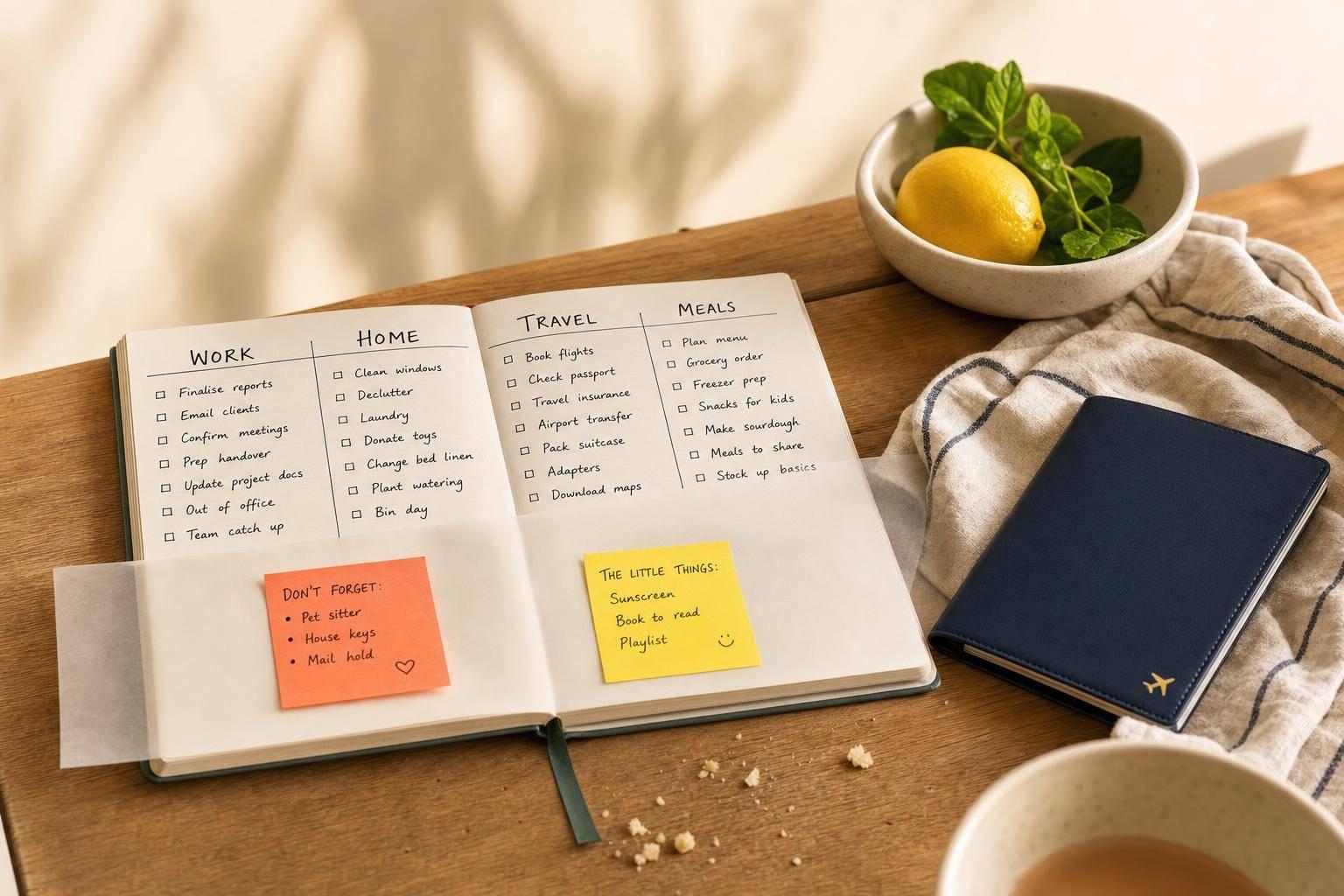
When the run-up to a holiday feels chaotic, I find it helps to stop treating it like one vague cloud of stress and break it into four plain buckets:
- work
- home
- travel
- meals
Simple, but effective.
Work is the “I can’t just vanish” part. Handovers, last emails, out-of-office replies, that one person who suddenly marks everything urgent because you dared to book leave.
Home is all the loose ends. Laundry, bins, keys, plants, pet care, medicine, tidying the fridge, maybe setting a light on a timer if you’ll be away a while.
Travel is the practical stuff people assume they will remember. Passports. Tyre pressure. Chargers. Swimwear. Booking papers. The child who now hates the shoes you packed.
Meals are where many households wobble. Not because cooking is hard every night, but because deciding, shopping, cooking, and cleaning up can feel like too much when your brain is already running at full capacity.
A survey by IPSOS has found that many adults feel stress levels climb before time off, not only because of money or travel, but because of the work that must be finished before they leave. Add family life to that, and it is no surprise the final week can feel busier than the break itself.
So what helps?
Not a perfect planner. Not a heroic burst of effort on Thursday night.
A visible list helps.
One shared list, started about 10 to 14 days before departure, is often enough to stop the last-minute scramble. Put every task in one place. Add a date. Give each job one owner. Not “we should sort the car”. Not “someone needs to check the passports”. One person. One task.
That small change matters because vague jobs drift.
And drifting jobs become 21:30 problems.
If you live with a partner or family, this is also the moment to get the hidden planning out of one person’s head. People are often happy to help. They are much less good at helping with things they cannot see. “Can you take the travel admin?” works. “Can you help me think of everything?” tends to end in both people looking annoyed near a pile of open bags.
The other fix is less noble, but very effective: lower the bar for dinner.
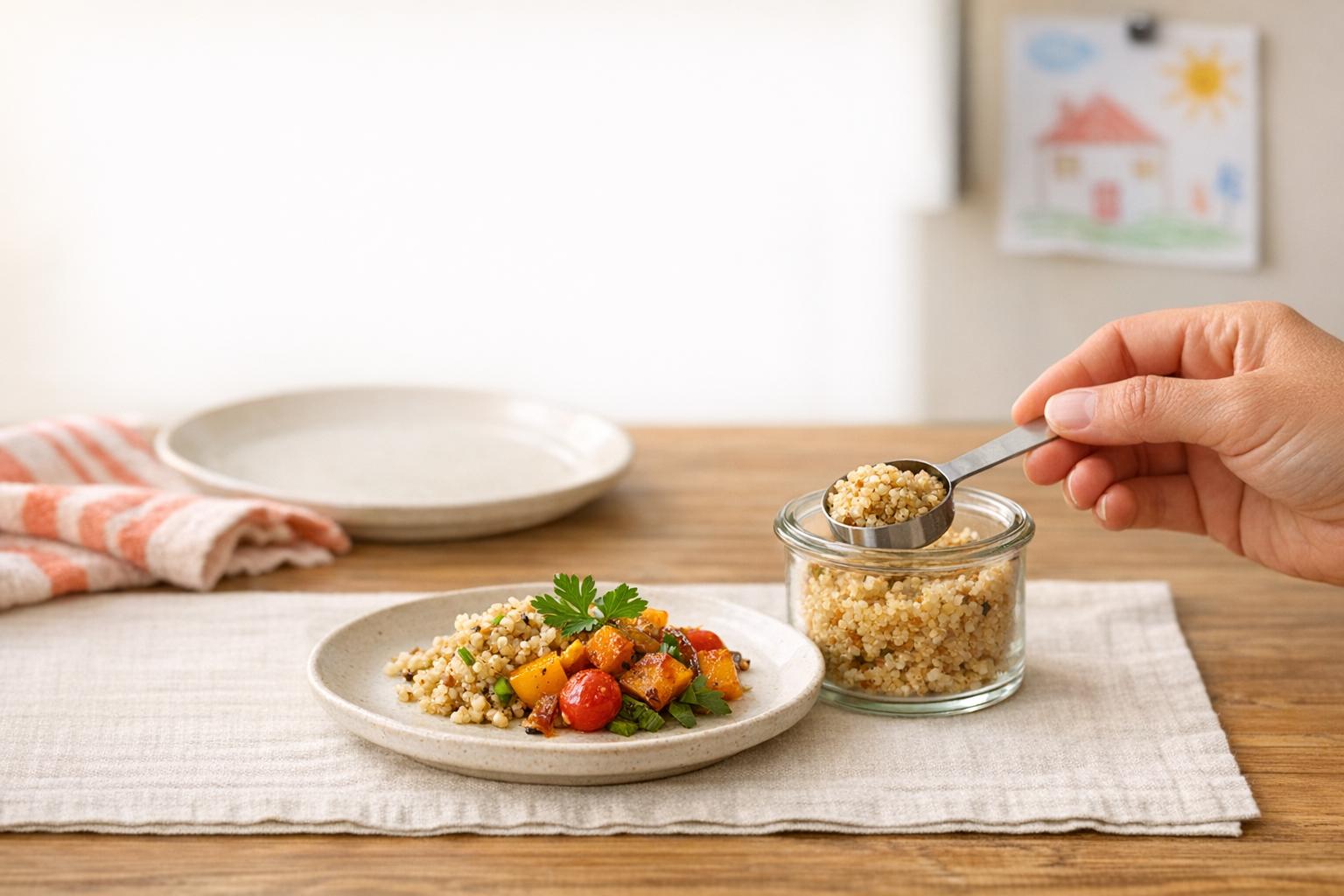
This is not the week to produce your finest work in the kitchen. Nobody is handing out awards for making an ambitious risotto two nights before a road trip to the Ardennes. Repeating easy meals, using leftovers on purpose, or keeping a few ready-made dinners in the fridge can save far more energy than people expect.
That is one place where we fit in at CrowdCooks.
We are not there to turn the whole week into a polished life system. We just take one repeating job off the list. A couple of meals in the final days before you leave, or the first night back, can remove the shopping, cooking, and washing-up chain reaction that tends to tip a busy evening over the edge.
And that first evening home matters too.
People talk a lot about leaving, but coming back has its own mess. Bags on the floor. Laundry multiplying with confidence. Work creeping back in. If dinner is already sorted, the landing is softer. Heat, eat, dishwasher, done. Sometimes that is all anyone needs.
A calmer holiday week usually has nothing to do with doing more.
It comes from doing fewer decisions at the wrong moment.
So if your next break already feels like admin in disguise, try this:
- write the hidden jobs down
- group them into work, home, travel, and meals
- give each task a date
- give each task an owner
- make dinners plain on purpose
That will not make the week empty. It will make it lighter.
And that is often enough.
Because the goal is not to leave the house like a four-person logistics unit with matching chargers. The goal is to get out the door with a bit more patience, a bit less friction, and enough energy left to enjoy the trip when it starts.
That counts for a lot.
Five simple ways to make the week before your holiday easier
The good news is that you don't need a military-style planning system to make the week feel calmer. A few small changes can make a surprising difference.
Give every task an owner
Holiday preparation often becomes stressful because everyone assumes someone else is taking care of it.
Instead of saying, "We still need to check the car," decide who is actually responsible for it. The same goes for passports, shopping, laundry, pet care or packing.
This is especially important in families. The invisible planning often ends up sitting with one person, while everyone else is happy to help—they just don't know what still needs doing.
Turning invisible jobs into visible tasks makes it much easier to share the load.
Lower the bar for dinner
The final week before a holiday is probably not the time to try ambitious new recipes.
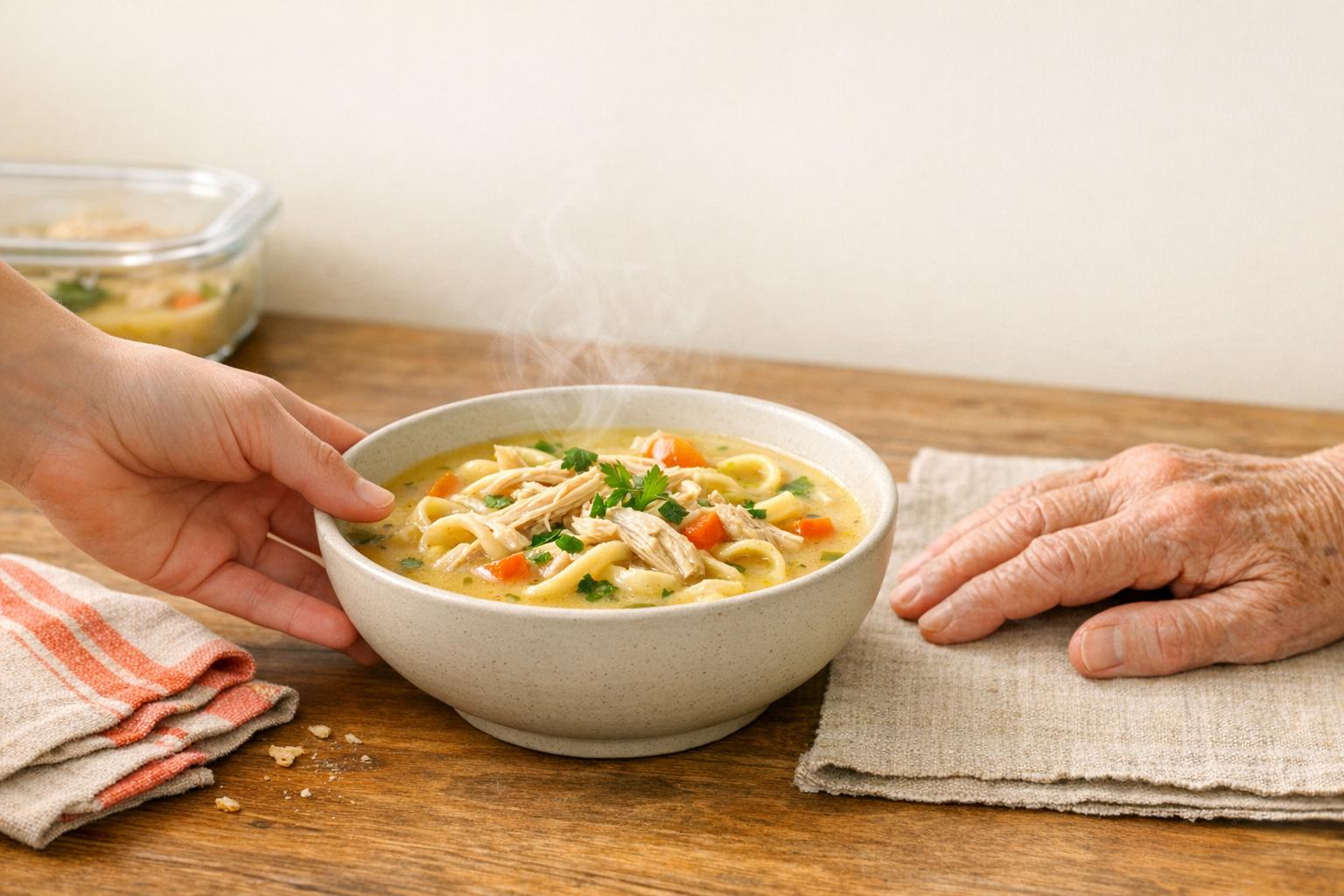
This is the week for simple meals, leftovers and using up what's already in the fridge. A pasta night, soup with good bread, an omelette or a tray bake can all do the job perfectly well.
And if even that feels like too much, there's nothing wrong with making life easier on purpose.
At CrowdCooks, many of our customers tell us they order a few meals for the final days before leaving—or even for the evening they come home. Having a healthy prepared meal made in Belgium waiting in the fridge removes shopping, cooking and washing up from an already busy day.
Sometimes that's exactly the breathing space you need.
Don't forget to prepare for coming home
We spend so much time thinking about leaving that we rarely think about returning.
Yet that first evening home is often just as hectic. The suitcases need unpacking, the laundry seems to multiply overnight, work starts creeping back into your inbox, and the fridge is usually looking rather empty.
Having a simple plan for that first dinner—or even a meal already waiting in the fridge—can make coming home feel much gentler. Holidays shouldn't end with an immediate trip to the supermarket.
Remember what you're preparing for
It's surprisingly easy to spend the entire week preparing for your holiday without actually looking forward to it.
The goal isn't to leave behind a perfectly organised house or an empty inbox.
It's simply to make the week before you leave feel a little less frantic, so you arrive at your holiday with enough energy to enjoy it.
sbb-itb-6dbd42c
Final thoughts
The week before a holiday will probably never be completely stress-free.
There will always be one last email, one forgotten charger or one child asking where their favourite swimming costume has gone.
But once you recognise the invisible to-do list for what it is, it becomes much easier to manage.
Write the hidden jobs down. Share them where you can. Keep dinners simple. And remember that "good enough" is often exactly that.
Because the holiday doesn't start when you reach your destination.
It starts when you stop feeling like you have to remember everything.