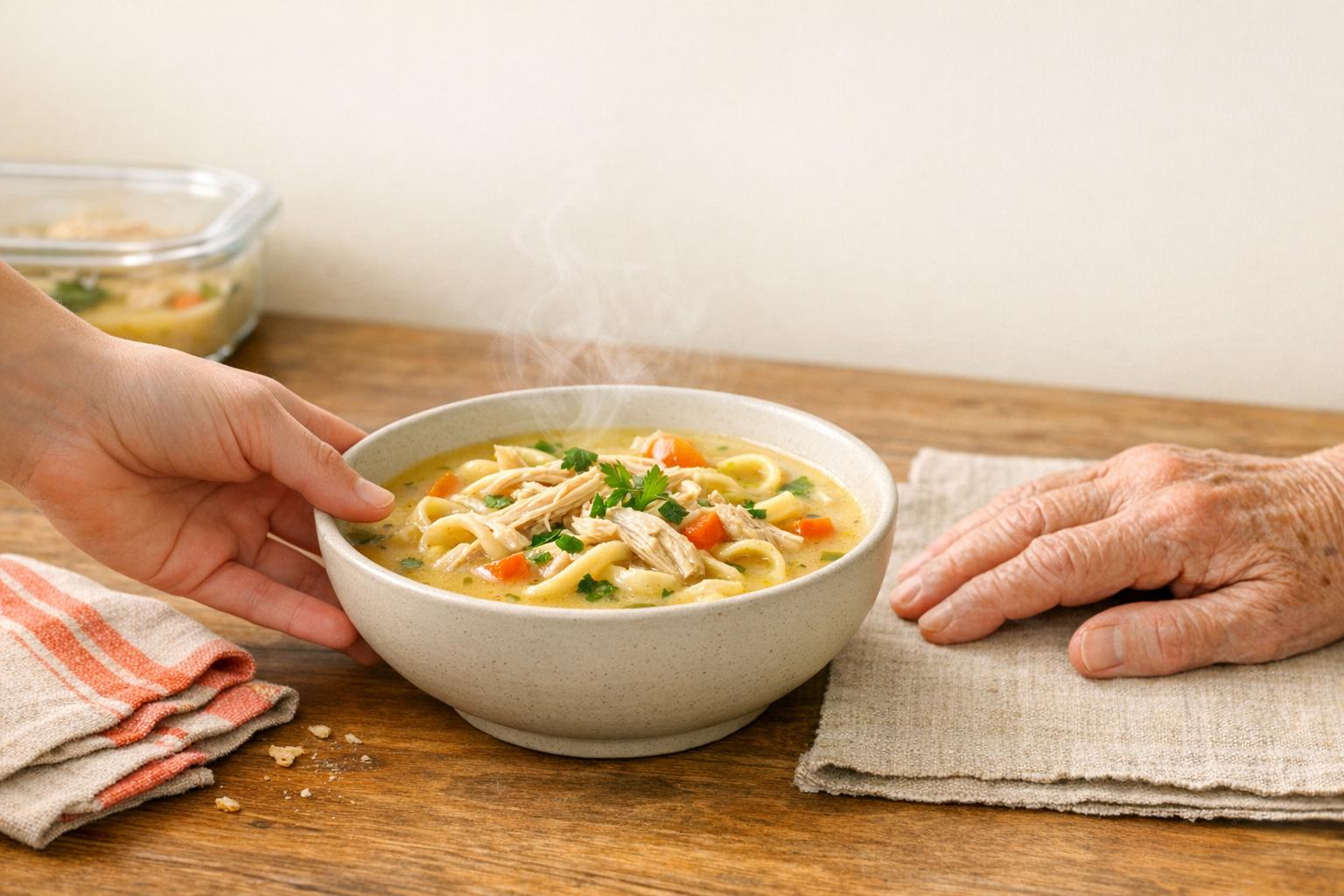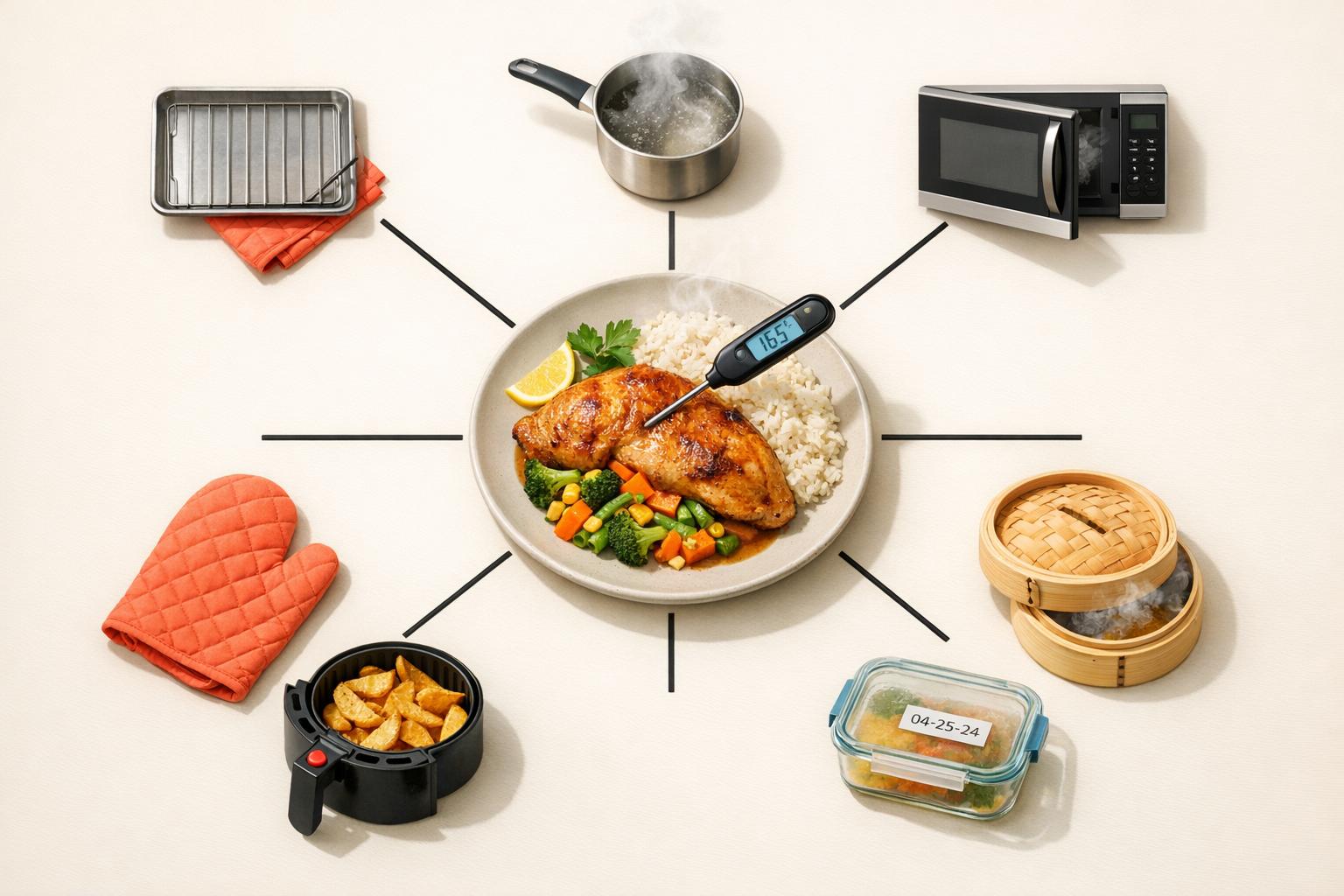

Reheating ready meals can be quick and easy if you use the right techniques. The goal is to heat food evenly, preserve its taste and texture, and ensure it's safe to eat by reaching 74°C (165°F). Here’s how you can do it:
- Oven: Best for baked dishes like casseroles and quiches. Use 150–175°C, cover with foil, and add a splash of liquid to prevent drying out.
- Stovetop: Ideal for soups and sauces. Add moisture, stir often, and heat gently to avoid sticking or burning.
- Microwave: Always cover your meal to retain moisture. Heat in short bursts, stir between intervals, and add liquid if needed.
- Air Fryer: Perfect for crispy foods like fried chicken or roasted potatoes. Preheat, avoid overcrowding, and flip items halfway through.
- Steaming: Great for delicate meals like fish or vegetables. Use a steaming basket or create a humid environment in the oven.
- Check Temperature: Always use a food thermometer to ensure the centre of the dish reaches 74°C for safety.
- Reheat Slowly: Use low heat and add liquid to maintain moisture. Store leftovers properly in airtight containers and refrigerate within two hours.
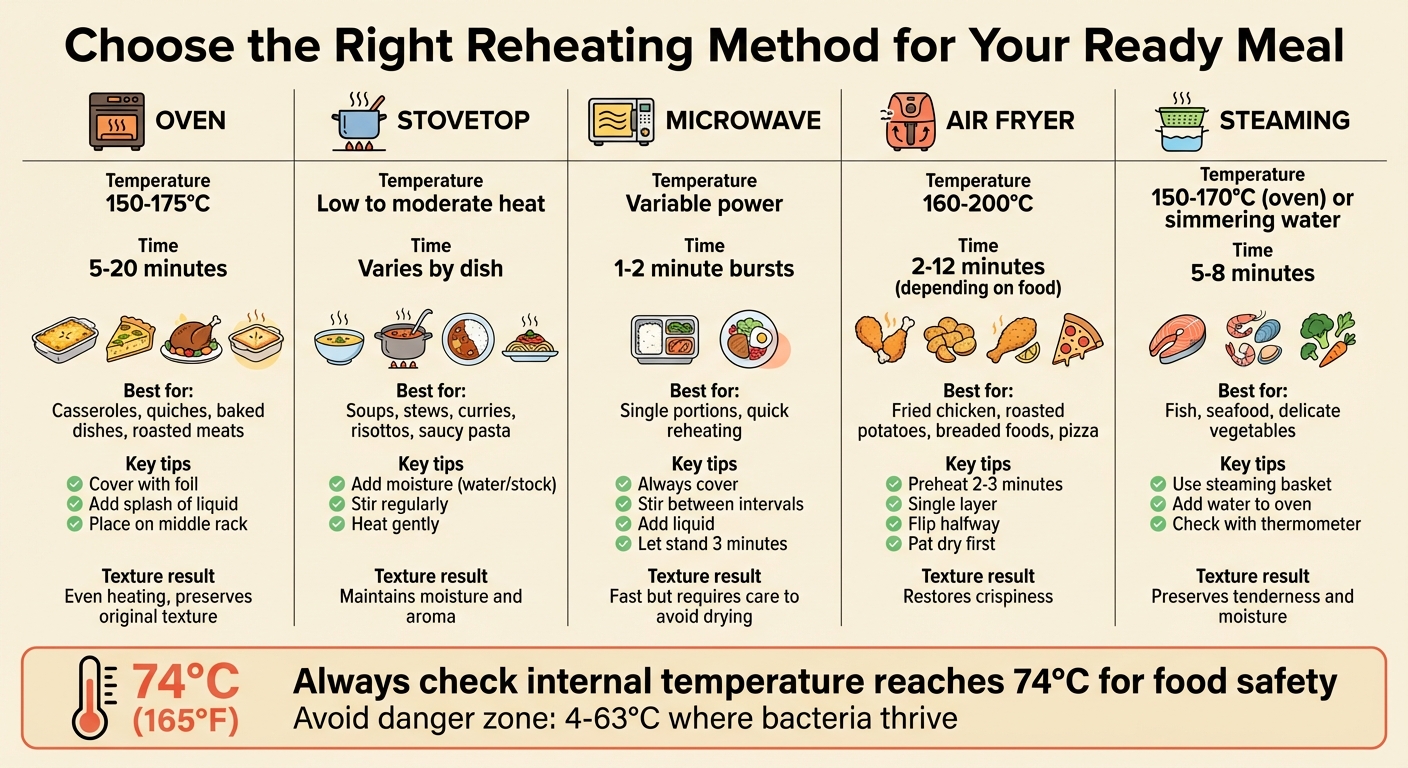
Best Reheating Methods for Different Ready Meal Types
The Best Ways To Reheat Your Favourite Foods
sbb-itb-6dbd42c
1. Use the Oven for Even Heating
Reheating food in the oven is a great way to preserve its texture and flavour. Unlike a microwave, which often heats unevenly and creates hot and cold spots, the oven provides consistent heat from all sides, warming the dish evenly.
This method is especially effective for meals that were originally baked, such as pasta gratins, roasted meats, casseroles, quiches, and tarts. Reheating food using the same method it was cooked with helps maintain its original quality. According to the USDA, the oven should be set to at least 165°C when reheating meals. However, a slightly lower range of 150°C to 175°C can be used for gentler heating, which helps retain moisture, texture, and nutritional value.
To prevent dishes from drying out, cover them with aluminium foil or an oven-safe lid. For pasta dishes or gratins, adding a splash of water, stock, or milk before reheating can help maintain moisture. If you're reheating bread or pastries, placing a bowl of water in the oven creates a humid environment that keeps them soft and fresh.
For dishes that need a crispy top, keep them covered for most of the reheating time, then uncover them during the last 5 minutes to achieve a crunchy finish without overcooking. Place the dish on the middle rack for the best heat circulation, and use a food thermometer to check that the thickest part of the dish reaches 74°C before serving.
Depending on the type and density of the food, reheating in the oven usually takes between 5 and 20 minutes. While it takes longer than using a microwave, the oven delivers much better results in terms of texture and flavour. This method works particularly well for ready meals, such as those from Crowd Cooks, ensuring the meal tastes as good as it did when first prepared.
2. Reheat on the Stovetop with Added Moisture
Reheating on the stovetop works perfectly for liquid-based or saucy dishes like soups, stews, curries, risottos, and pasta with gravy. This method gives you precise control over the heat, helping to bring back the original flavour, texture, and aroma of your meal - something microwaves often struggle with.
One key tip: tackle moisture loss right away. Direct heat tends to evaporate liquids, which can leave your dish dry or rubbery. To avoid this, add a splash of water, stock, or extra sauce while reheating. This not only keeps the dish moist but also prevents it from sticking to the pan. For rice dishes, mix in a bit of water, cover the pan, and stir occasionally. For meats in gravy, heat the gravy first until it simmers, then briefly add the meat to keep it tender and juicy.
Stirring regularly is crucial. It helps spread heat evenly and ensures any added moisture is well-distributed, preventing the bottom from burning while the top stays cold. Stick to low to moderate heat for a gentle, even reheat - this way, the edges won’t dry out before the centre warms up. By managing the temperature carefully, you can bring your meal back to life without compromising its quality.
For dishes like stews and sauces, as recommended by Crowd Cooks, always ensure the centre reaches 74°C for safe consumption.
3. Cover Your Meal When Using the Microwave
Microwaves are a go-to for reheating single portions quickly, but they can leave your food dry or rubbery if you’re not careful. The secret? Always cover your meal. Covering helps trap steam, keeping the moisture in your food. Without it, moisture escapes, leaving you with dry edges and, often, a cold centre.
"Covering food helps retain moisture, shorten cook time, and reduce spattering." - Whirlpool
For best results, use a microwave-safe lid or even a damp paper towel, especially for grains that tend to dry out. If you’re using microwave-safe cling film, make sure to leave a small gap or pierce it to allow steam to escape - this prevents any dangerous pressure build-up. For ready to eat meals with sealed film, don’t forget to pierce the top with a fork before heating.
Another key tip is to heat your food in short bursts - 1 to 2 minutes at a time. Stirring or rotating the food between intervals ensures even heating, as microwaves only penetrate about 2.5 to 4 centimetres into food. This step helps eliminate those annoying cold spots.
Adding a splash of liquid, like water or broth, before microwaving can also improve the texture of your meal. Once heated, let the food stand for about 3 minutes to allow the heat to distribute evenly. And most importantly, make sure the centre of your meal reaches a safe temperature of 74°C.
4. Use an Air Fryer to Keep Food Crispy
If you're looking for a way to bring fried or roasted foods back to life, an air fryer might just be your best friend. It’s a great tool to reheat items like fried chicken or roasted potatoes, restoring their crispiness without the soggy texture you’d often get from a microwave. Unlike microwaves, which tend to trap steam and leave food rubbery, air fryers use hot air circulation to recreate that satisfying crunch.
"The magic lies in the air fryer's powerful heating element and fan, which circulates hot air around your food faster than a conventional oven. This concentrated airflow removes moisture from the food's surface while heating it evenly throughout, restoring the Maillard reaction - the chemical process responsible for browning and crispy textures." – Hamlet Fort, Author
Here’s how it works: the air fryer’s rapid airflow dries out the surface of the food while evenly heating it, bringing back that golden-brown, crispy texture we all love.
To get the most out of your air fryer, preheat it for 2–3 minutes and set the temperature between 160°C and 200°C. For thin-cut fries, aim for 190°C–200°C and reheat for 2–4 minutes. Bone-in fried chicken, on the other hand, usually takes 8–12 minutes at 190°C. To ensure even crisping, place the items in a single layer - avoiding overcrowding - pat them dry with a paper towel to remove extra moisture, and shake or flip them halfway through the process.
For an extra crispy finish, lightly brush your food with a high-smoke-point oil like olive or avocado oil. This trick works wonders for breaded foods like schnitzel, roasted veggies, or even leftover pizza, giving you a golden, crunchy exterior while keeping the inside tender.
An air fryer is a fantastic way to restore the taste and texture of your favourite ready meals, including those from Crowd Cooks.
5. Steam Delicate Meals to Preserve Moisture
Not every reheating method works for all dishes. When it comes to delicate meals like fish, seafood, or tender vegetables, steaming is your go-to option to avoid ruining texture and flavour.
Steaming works differently from methods like baking or microwaving. Instead of exposing food to direct heat that can dry it out, steaming surrounds the dish with gentle, consistent moisture. This helps maintain the natural tenderness of proteins and vegetables.
"Steaming is a traditional method for preserving the tenderness and delicate taste of fish..." – Food Network Kitchen
To steam on the stovetop, bring a small amount of water to a simmer in a pot. Place your food in a heatproof dish inside a steaming basket, cover tightly, and let it heat for 5 to 8 minutes. Always check the internal temperature with a probe thermometer to ensure it reaches 74°C for safe consumption.
No steamer? No problem. In the oven, you can create a similar effect by placing a bowl of water on the rack next to your dish. Heat at 150–170°C, and the steam will prevent your food from drying out. For dishes like pasta, rice, or grains, add a splash of water, stock, or milk before reheating to restore moisture.
When reheating fish fillets, consider placing a layer of napa cabbage underneath. This prevents sticking and protects the delicate texture of the fish. This technique is particularly useful for ready meals from Crowd Cooks, ensuring the seafood or lean proteins stay as tender and flavourful as when they were freshly prepared.
6. Check the Internal Temperature
Reheating food isn’t just about making it warm; it’s about making it safe to eat. The best way to ensure this is by using a food thermometer to check the internal temperature. Judging by appearance alone isn’t enough.
To kill harmful bacteria, heat your food to at least 75°C (165°F). This is especially important because bacteria thrive in the "danger zone" between 4°C and 63°C. Some foods, like rice, can harbour heat-resistant spores, so thorough reheating is essential to avoid food poisoning.
"Reheat leftovers until steaming hot throughout - they should reach and maintain 165°F (70°C) for two minutes." – Healthline
Temperature control is critical whether you’re using a microwave or a stovetop. For best results, insert the thermometer into the thickest part of the food, as this area takes the longest to heat. If you’re reheating in a microwave, stir the food halfway through cooking and check the temperature in multiple spots to avoid cold areas where bacteria might linger. For soups or sauces on the stovetop, bring them to a full rolling boil instead.
Once your food reaches 75°C, keep it at that temperature for at least two minutes to ensure it’s completely safe. Whether it’s a meal from Crowd Cooks or leftovers from last night, a food thermometer is your best ally for reheating with confidence and safety.
7. Reheat Slowly and Store Correctly
When it comes to reheating, patience truly pays off. Using high heat to reheat food quickly often results in a meal that's overcooked on the outside but still cold in the centre. Instead, aim for a gentle approach: reheat your food slowly at a low temperature (140–160°C) to keep the flavours intact and the moisture locked in.
"Reheating too quickly or too hard dries out food and can make it rubbery." – Frigelux
To prevent dryness, add a bit of liquid - like water, stock, or milk - before reheating. Cover your dish with a lid or foil to trap steam, ensuring the heat is evenly distributed. If you're using a microwave, heat in short bursts of 1–2 minutes, stirring in between to promote even warming.
Proper storage is just as critical for maintaining your meal's quality. After reheating, store leftovers in airtight containers and refrigerate within two hours. While food safety can extend up to six days, the flavour and texture are best within four days. For example, Crowd Cooks meals are packaged to stay fresh for up to five days, giving you flexibility without sacrificing taste.
For frozen meals, plan ahead by defrosting them in the refrigerator the day before. This method helps maintain the texture of the dish. And remember, never refreeze meals that have already been defrosted and reheated, as this can lead to both health risks and a decline in quality.
Conclusion
Reheating ready meals doesn’t have to mean sacrificing taste or texture. By selecting the right method - whether it’s the oven for consistent heating, the stovetop to keep moisture intact, or the air fryer for that satisfying crunch - you can bring your meal back to life almost as if it were freshly made. Knowing which foods respond best to specific reheating techniques makes all the difference in preserving both flavour and texture.
Temperature control is key to both safety and quality. Always heat your food to at least 74°C (165°F) to ensure it’s safe to eat. A food thermometer is an easy tool to help you confirm the entire dish reaches this temperature.
Small tweaks can make a big impact. Adding a bit of water or stock prevents grains and proteins from drying out. Covering your dish helps retain steam, ensuring even heating and avoiding dryness. If you’re using a microwave, heat in short bursts of 1–2 minutes and stir in between to eliminate cold spots.
Don’t overlook proper storage. Refrigerate leftovers within two hours and aim to eat them within four to five days for the best taste and texture. For frozen meals, defrosting them in the fridge the night before reheating keeps their structure intact and avoids that dreaded mushy texture.
FAQs
Can I reheat a ready meal straight from frozen?
Reheating a ready meal straight from frozen isn't the best idea. It often leads to uneven heating, which can compromise both the texture and safety of the food. To get the best outcome, let the meal thaw in the fridge first or use your microwave's defrost setting. Once it's thawed, make sure to reheat it thoroughly to achieve an even temperature and preserve its quality.
How can I avoid cold spots when microwaving?
To avoid those pesky cold spots when microwaving ready meals, try covering the dish with a microwave-safe lid or cling film. Adding a splash of water can help keep the meal moist. For even heating, give the food a stir or rotate it halfway through the reheating process. This ensures the entire dish heats evenly, preserving both its texture and flavour.
How many times is it safe to reheat the same meal?
Reheating the same meal only once is a safe practice to maintain both food safety and quality. Warming food multiple times can raise the risk of bacterial growth, while also potentially altering its taste and texture.